Showing posts with label Eagle Hill Institute. Show all posts

Friday, July 17, 2015

July 17: Eagle Hill Institute, Shadbush berries

Tromping around a sunny field looking for skippers and other butterflies this afternoon, we came across several fruit-laden shadbushes. I had never before tried this ambrosial fruit. Now I'll be fighting off the waxwings whenever I see one.
Our instructor Bryan Pfeiffer shows us how it's done
The world offers this up:
sun-ripened shad berries,
azures blue as sky.
Cherry Gall Azure
 

Thursday, July 16, 2015

July 16: Eagle Hill Institute, Bogs

Today we took field trips to Jonesport Heath and Harrington Heath, two sphagnum bogs that feature a couple of uncommon butterfly species: Crowberry Blue (host plant Black Crowberry Empitrum nigram) and Bog Copper (host plant Small Cranberry Vaccinium oxycoccos, not to be confused with Oxycodone).
Plebejus idas empetri
Lycaena epixanthe
I love bogs and the stunted, specialized plants that such an extreme habitat produces: insectivorous plants like sundew and pitcher plants, miniature spruce and tamarack, cotton grass, cranberries, crowberries, and cloudberries, and delicate, unexpected orchids like this Grass Pink:
Calopogon tuberosus
Bog in summer--
empty pitchers waiting to fill,
sparrow's July trill.


Wednesday, July 15, 2015

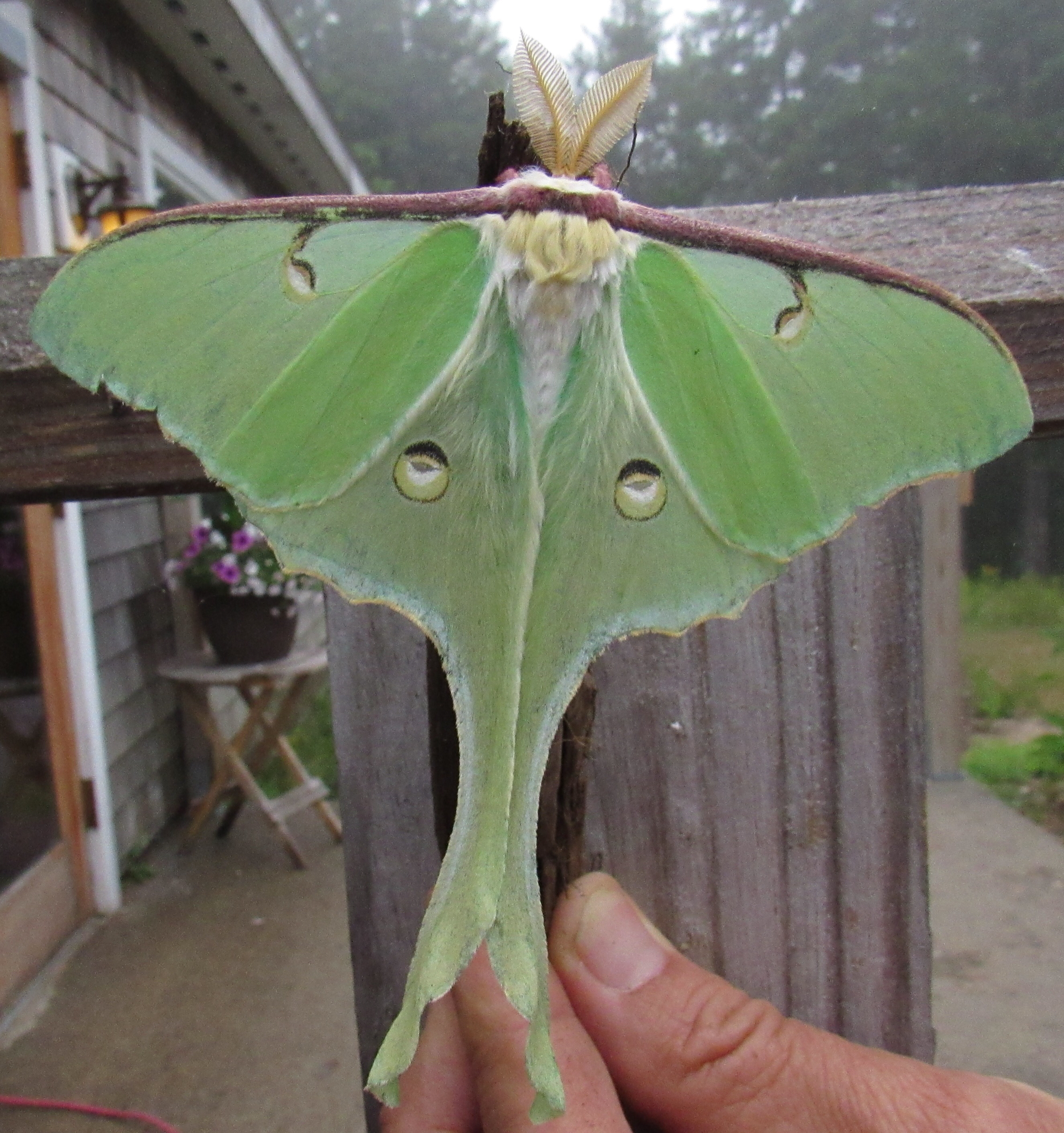
July 15: Eagle Hill Institute, Luna Moth

One moth most people seem to know and that everyone marvels at is the Luna Moth, Actia luna--or as I heard someone refer to it recently, "the lunar moth." In addition to its beauty, the Luna Moth is interesting because, like many moths in their adult form, it doesn't eat. It doesn't even have a mouth. The sole reason for its brief existence is to mate, lay eggs, and produce more Luna Moths.
 
Luna Moth's short life--
it's not about beauty
but about making more.
 

Tuesday, July 14, 2015

July 14: Eagle Hill Institute, Moth dump

Spent a good part of today sorting through a pile of moths from a trap that was set in a field last night. We sorted them by family and then tried to identify genus and species. By bedtime, squadrons of dead moths were lined up and labeled--immersion learning at its best.
 
Sphinx moths stare at us
over their new labels--
order from chaos.
Photo by Bryan Pfeiffer
 

Monday, July 13, 2015

July 13: Eagle Hill Institute, Field Work

Swinging my net
I decapitate clover
but not the butterfly
Great Spangled Fritillary (I didn't catch this one)
 

July 12: Eagle Hill Institute, Day One

Spending a week studying butterflies and moths at Eagle Hill Institute in Steuben, Maine. The first night we stayed up late photographing moths at UV lights. Instructor Hugh McGuinness says we had over 150 species, some of them startlingly beautiful when examined up close.
 
moths at the light
each one a Rorschack test
an artwork briefly hanging
Green Arches: Anaplectoides prasina
Cherry Scallop Shell: Rheumaptera prunivorata